
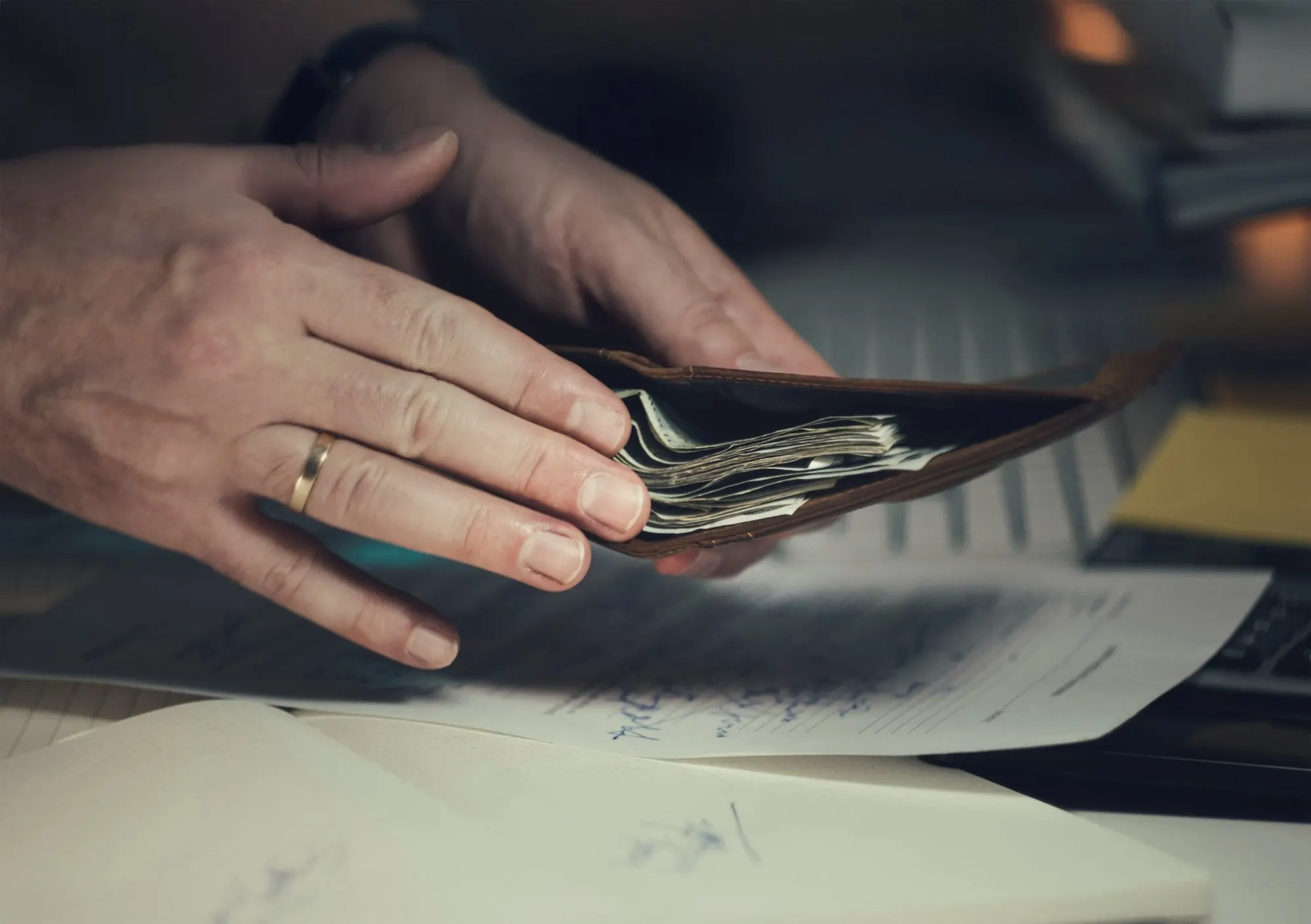
Short answer: an ATM charges a fee because somebody has to pay to buy it, keep it stocked with cash, connect it to the card networks, repair it and answer the phone when it breaks. If the ATM isn’t owned by your bank, the fee on the screen is how that owner covers the cost. Bankrate’s March 2026 survey found the average out-of-network withdrawal costs $4.86 once your own bank’s charge is added. You can avoid most of it, and this guide shows how.
If you own or manage a business, there is a second half to this story: how a store can have an ATM without paying any of these costs itself. That’s at the end, under what this means for a business.
What an ATM fee actually pays for
A cash machine looks simple, but a lot happens behind the screen (we walk through it in how an ATM machine works). Each withdrawal needs real cash, a secure connection, a processor to approve it and a team to keep the machine running. The fee on the screen helps cover:
| Cost of running an ATM | Why it exists |
|---|---|
| The machine and its installation | A bank-grade cash dispenser is a major piece of equipment |
| Cash in the machine | Cash has to be loaded, balanced and recorded; cash that sits in a machine isn’t earning anything |
| Connectivity and card processing | Every transaction is sent securely to the card networks and back |
| Monitoring | The owner watches cash levels and faults so the machine stays in service |
| Maintenance and repairs | Dispensers, card readers and printers wear out |
| Support | Somebody answers when a card is stuck or a machine is down |
Banks pay for the same things. They simply recover the cost another way: through account fees and, in some cases, charges to customers of other banks. That is why a machine at your own bank usually shows no fee at all.
Who gets each part of the fee?
At an ATM that belongs to a different bank or company, a withdrawal can carry two separate charges:
- The ATM owner’s fee. This is the convenience fee the machine shows on screen before you confirm. It is set by the company that owns and services the machine.
- Your own bank’s out-of-network fee. Your bank may charge you for using another institution’s machine. You never see this on the ATM; it appears later on your statement.
Bankrate’s March 2026 survey put the average of the two together at $4.86 per withdrawal, about $1.64 from the customer’s bank and the rest from the machine’s owner. Those numbers vary by bank and by place, so treat them as a guide and check your own account terms.
Can a bank really charge you for this? Yes. U.S. federal banking guidance says federal law allows banks to charge ATM fees, and the ATM’s operator has to disclose its fee before you complete the transaction.
Do ATMs have to tell you about the fee first?
Yes. In the U.S. the owner of the ATM must post a notice on the machine and show the fee on screen before the transaction is completed. You can then cancel with no charge. Nothing is hidden: if you don’t want to pay, you press cancel and walk away.
BayTM machines follow the same idea: the customer sees the convenience fee on the screen and confirms it before the withdrawal.
How to avoid ATM fees
Most people can get to $0 for most withdrawals with a little planning:
- Use your own bank’s ATMs. Your bank’s app or website has a locator. If you have a lot of cash needs, it can be worth choosing a bank with machines near your home and work.
- Check your bank’s fee-free network. Many banks and credit unions belong to shared networks of thousands of ATMs where you pay no fee. Look for the network’s logo on the machine.
- Get cash back at the register. Many grocery stores and pharmacies let you add cash back to a debit card purchase for free.
- Choose an account that refunds ATM fees. Some banks and credit unions refund the fees other ATM owners charge.
- Take out one larger amount. The fee is usually a flat amount per withdrawal, so one $100 withdrawal costs less than four $25 withdrawals.
- Read the screen before you confirm. If the fee is higher than you expected, cancel and find another machine. That costs nothing.
Why are some ATM fees higher than others?
Machines in places like bars, event venues, gas stations and tourist areas often show higher fees than a machine at a bank branch. A few reasons why:
- Smaller volume per machine. A machine that serves a few dozen customers a day has to cover the same fixed costs as a busy one.
- Location. A machine in a small business, at an event or in a hard-to-reach spot costs more to service than one in a bank lobby.
- Convenience. You are paying to have cash at the moment and place you need it.
What this means for a business
Customers want cash at the counter, at the door and at the table. If your business takes cards, an ATM can still keep a sale from walking away. The question for an owner is who pays for the machine.
You have two basic routes: buy and run your own ATM, or have a company place one for you. With BayTM’s free ATM placement, the machine, installation, cash loading, connectivity, maintenance and repairs cost your business nothing. There is no monthly fee and no minimum transaction volume. The fee on the screen is paid only by the customer who chooses to use the machine. For a closer comparison, read free placement vs. a merchant-owned ATM, how ATM placement works or whether an ATM is worth it for your business.
BayTM serves businesses across California, with the San Francisco Bay Area as home, and places ATMs in every U.S. state. Request a free location review and we’ll tell you whether your business is a good fit.
Frequently asked questions
Why do ATMs charge fees?
Because running a cash machine costs money. Someone has to buy and install the ATM, keep it loaded with cash, pay for the network connection and card processing, repair it and answer the support line. A convenience fee on the screen pays for that. At a bank-owned ATM those costs are covered by the bank, which is why using your own bank's machines is usually free.
How much do ATMs charge in 2026?
Bankrate's March 2026 survey put the average out-of-network ATM cost at $4.86 per withdrawal. That is two charges added together: a fee from your own bank (about $1.64 on average) and the fee set by the ATM's owner. The ATM's own fee is shown on its screen, so you can compare before you decide.
Do I have to be told about the fee before I withdraw?
Yes. In the U.S., the ATM operator must tell you about its fee, on the machine and on the screen, before you complete the transaction, and you can cancel without paying it. With BayTM machines the convenience fee is shown on screen for the customer to confirm before the withdrawal.
How can I avoid ATM fees?
Use your own bank's ATMs or a network it belongs to, ask for cash back at a store register, choose an account that refunds ATM fees, or take out one larger withdrawal instead of several small ones. The full list is below.
Is the fee really charged twice?
It can be. At an ATM outside your bank's network, the ATM owner adds its fee and your own bank may add a second one. The ATM only shows its own fee, so check your bank's out-of-network charge in your account terms.
If an ATM charges a fee, does the store pay for it?
With BayTM's free ATM placement the store pays nothing for the machine, installation, cash loading, connectivity, maintenance or repairs, and there is no monthly fee. The customer who chooses to use the machine sees the convenience fee on screen and confirms it before the withdrawal.