
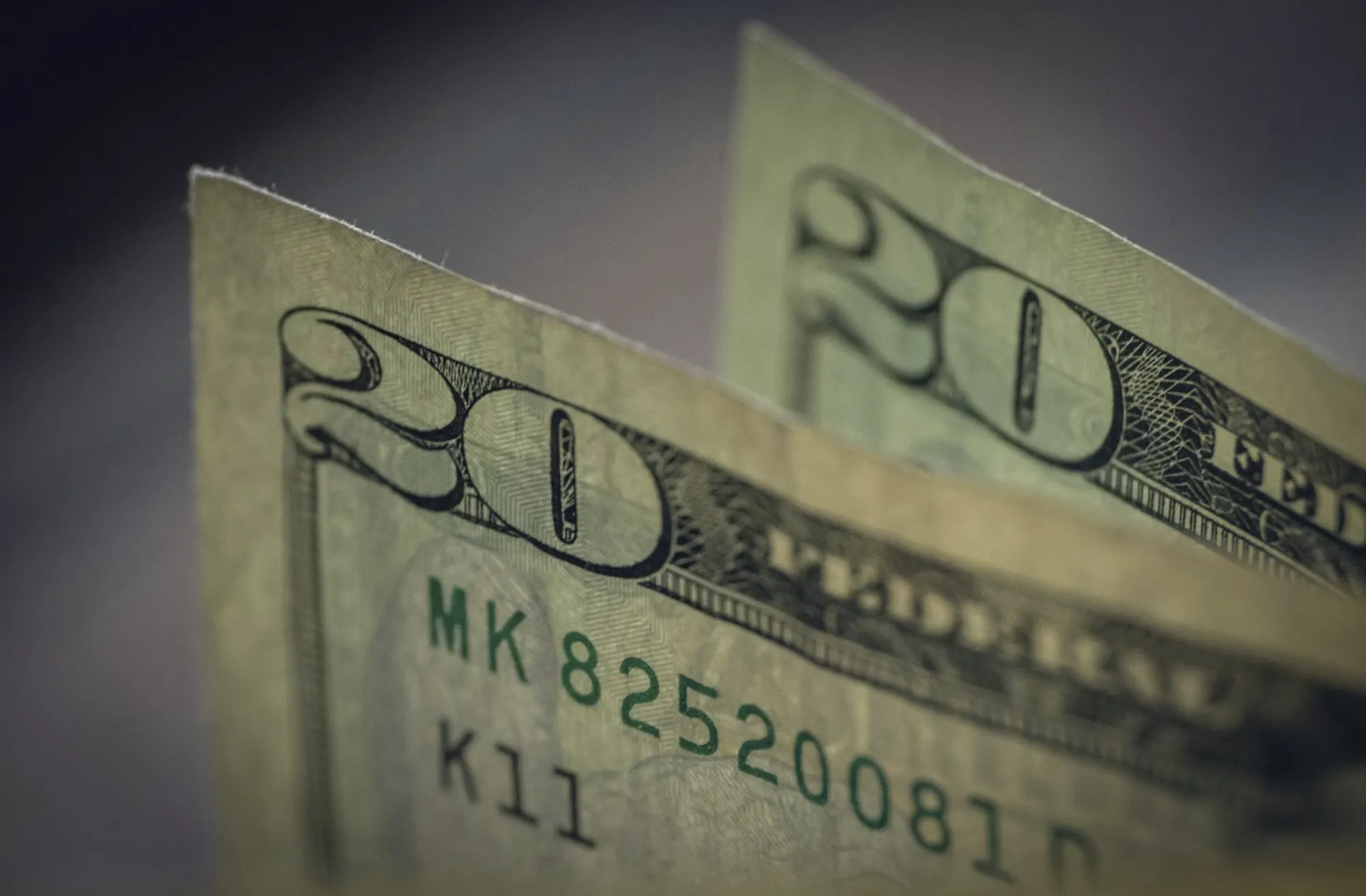
Short answer: a typical retail ATM, the kind you see in a bar, corner store or laundromat, holds a single cash cassette of about 1,000 bills. Loaded with $20s, that’s about $20,000 when full. Some models take a larger cassette of about 2,000 bills, or about $40,000. Bank ATMs hold far more, because they have several cassettes.
In practice, most retail ATMs are loaded with much less than they can hold. Below: how cassette capacity works, what it means in dollars, how retail and bank machines are loaded and refilled, and what it all means if you’re thinking about an ATM for your business.
Cassette sizes explained
Inside every ATM’s safe is at least one cassette: a locked, removable box that holds the bills. When a customer withdraws cash, the dispenser counts the notes out of the cassette, checks them and pushes them through the slot. The cassette is what gets filled, and its size sets the ceiling on how much cash the machine can carry.
Capacity is counted in bills, not dollars. A 1,000-bill cassette holds 1,000 notes whatever their denomination, so the dollar value depends on what’s inside. Here’s the arithmetic for the two most common retail cassette sizes:
| Bills in the cassette | Filled with $20s | Filled with $50s | Filled with $100s |
|---|---|---|---|
| 1,000 | $20,000 | $50,000 | $100,000 |
| 2,000 | $40,000 | $100,000 | $200,000 |
A few things to keep in mind when reading that table:
- Retail ATMs usually dispense $20s. It’s what most customers expect, and it lets the machine pay out any amount in $20 steps. So for most machines in stores and bars, the first column is the one that matters.
- Those are maximums. A full cassette is the physical limit, not a typical load. (More on that below.)
- Some retail models go bigger. Depending on the model, a machine may accept a larger cassette or more than one, which is why the right comparison is always model to model. See Hyosung vs. Genmega.
- Bill condition matters. Crisp, sorted notes dispense reliably. Worn, torn or folded bills are more likely to jam, which is one reason loading is a job for someone who does it regularly.
Retail ATMs vs. bank ATMs
| Retail ATM (in a business) | Bank ATM (at a branch) | |
|---|---|---|
| Cash cassettes | Usually one | Usually several |
| Typical capacity | About 1,000 bills; some models about 2,000 | Several thousand bills across cassettes |
| Bills | Usually $20s only | $20s, sometimes $10s, $50s or $100s |
| Deposits | Usually withdrawals only | Often accepts deposits too |
| Who loads it | The ATM operator or the business owner | The bank or its cash-logistics company |
Retail machines such as the Hyosung and Genmega models we place are built for a business’s floor: compact, usually a single cassette, and dispensing $20s. Bank machines are bigger, bolted into a wall or a branch lobby, and built to serve a bank’s own customers at volume.
How much cash by type of location
There’s no single “typical” amount that fits every business. What varies from place to place is the kind of machine and the things that drive how much it needs:
| Type of location | Usual machine | What drives how much is loaded |
|---|---|---|
| Bar or nightclub | Retail, one cassette | Weekend nights, cash tabs, cover charges and tips |
| Convenience store or gas station | Retail, one cassette | Steady daily traffic, plus paydays and holidays |
| Laundromat | Retail, one cassette | Weekend peaks and customers who stay a while |
| Hotel lobby | Retail, one cassette | Guests who need cash for tips, parking and small vendors |
| Casino, card room or stadium | Retail machines, often more than one | Big crowds and sharp peaks on busy nights |
| Bank branch | Bank ATM, several cassettes | Branch traffic, withdrawals and deposits |
The loaded amount at any of these varies with traffic and with how often the machine is refilled. A machine that is visited often can carry less; one that is visited rarely has to carry more to last.
How much cash is actually loaded?
Capacity is the ceiling, not the usual amount. How much goes in depends on:
- How many withdrawals the location sees. A busy bar on a Saturday needs more than a quiet shop on a Tuesday.
- How often the machine is reloaded. More frequent loading means less cash sitting in the machine.
- Busy periods. Holiday weekends, events and move-in weeks call for a bigger load ahead of time.
- Security. Less cash in the machine means less at risk.
- The cost of idle cash. Every dollar sitting in a cassette is a dollar that isn’t in a bank account or the till.
The goal is simple: never run out, never overload. An ATM that goes empty on a Friday night loses customers’ trust fast. An ATM stuffed with far more than it needs just ties up cash.
How retail and bank ATMs are loaded
Bank ATMs are usually serviced by the bank’s own staff or by an armored cash-logistics company. Rather than counting bills into the machine on site, the crew often swaps full cassettes prepared in a cash vault for the used ones, and collects any deposits the machine has taken. The cash is the bank’s, and so is the paperwork.
Retail ATMs are loaded by whoever owns the cash in them:
- With free placement, the ATM company loads its own cash and handles everything. The business never touches it.
- With a merchant-owned ATM, the business loads the machine from its own cash, often straight from the till or safe, or pays an armored or cash loading service to do it.
Either way, a proper load has a few steps: open the safe with the right access, fill or swap the cassette, record exactly what went in, and run the machine’s balancing report so the cash dispensed matches the cash removed. Skipping the record-keeping is how shortages go unexplained.
How often are ATMs refilled?
There’s no standard schedule. A machine is refilled when it needs to be, and that depends on how fast it’s being used and how much it holds. A busy machine in a bar or corner store needs visits more often than one in a quiet shop, and a larger cassette can stretch the time between visits.
Modern operators don’t rely on a fixed calendar alone. The machine reports its cash level over the network, so the next load can be planned around real usage, with extra ahead of the busy periods that locals know about: holiday weekends, events, paydays and move-in weeks.
What happens when an ATM runs out of cash?
It stops dispensing. The screen shows an out-of-service or “unable to dispense” message, and every customer who came for cash walks away without it. Some go to another machine down the street, and some spend their money there instead of with you. Worse, customers remember: an ATM that’s often empty stops being the one people rely on.
That’s why monitoring matters. Modern ATMs report their status over the network: cash level, errors and a record of each transaction. With remote monitoring, a low-cash alert goes to the operator before customers see an out-of-service screen. It’s the main difference between an ATM that’s always working and one that’s empty half the weekend.
Who’s responsible for the cash in your store?
This is the question that matters most to a business owner, and it depends on how you get your ATM:
- If you buy your own ATM, you supply the cash. That’s often thousands of dollars of your own money sitting in the machine, and you or your staff load and balance it. See how much an ATM costs.
- With BayTM’s free placement, we load our own cash. Our team loads it, and the machine reports its cash level remotely, so we can reload before it runs dry. Your staff never handle the machine’s cash. See how free placement works.
Is an ATM right for your business?
If customers ask for cash, skip tips, or leave to find an ATM, it may be worth it, and with free placement there’s no cash of your own at stake. Take the two-minute check, read is an ATM worth it for a small business?, or request a free location review and we’ll tell you honestly whether your location is a fit.
Busy cash locations like bars and nightclubs need more frequent loading than quiet shops, and we plan the loading for you.
Frequently asked questions
How much money does a gas station or convenience store ATM hold?
A gas station or convenience store ATM is typically a retail machine with a single cassette of about 1,000 bills. Filled with $20s, that is about $20,000. Some models take a 2,000-bill cassette, or about $40,000 in $20s. The amount actually loaded is usually well below the maximum and depends on how busy the store is and how often the machine is refilled.
How often are ATMs refilled?
There is no standard schedule. A busy machine needs refilling more often than a quiet one, and many operators refill based on the cash level the machine reports remotely rather than on a fixed calendar. Machines are often loaded more heavily ahead of holiday weekends and events.
What happens when an ATM runs out of money?
It stops dispensing and shows an out-of-service or “unable to dispense” message until it is refilled. Customers who needed cash leave to find another machine, and some take their spending with them. Remote monitoring helps the operator refill before that happens.
Can an ATM hold $50 or $100 bills?
Some machines can be set up for other denominations, but retail ATMs in stores and bars usually dispense $20s. For reference, a full 1,000-bill cassette holds $50,000 in $50s or $100,000 in $100s, and a 2,000-bill cassette holds twice that.
Who owns the cash inside an ATM in a store?
It depends on the arrangement. With free placement, the cash belongs to the ATM company, which loads it; with BayTM, your staff never handle it. With a merchant-owned ATM, the cash is the business’s own and comes back to its bank account through settlement as customers withdraw it. See free placement vs. a merchant-owned ATM.